What to discover
Your starting point for reports, toolkits, publications, and media that support equitable and sustainable food systems in Northwestern Ontario.
How to explore
Explore resources by type or theme, and find what you need to spark ideas, guide action, and deepen community connections.
Get involved
Have a helpful tool or resource to share, or spotted a broken link? We’d love to hear from you—get in touch and help us keep things current!
Explore our resources
Context of our work
Curious about community food systems? You’re in the right place. Whether you’re new to these ideas or already deep into food systems work, we’re offering a bite-sized (but nourishing!) overview of the ideas that shape our collective efforts. Explore how food systems work, why they matter, and how communities are cultivating change from the ground up.
Food System
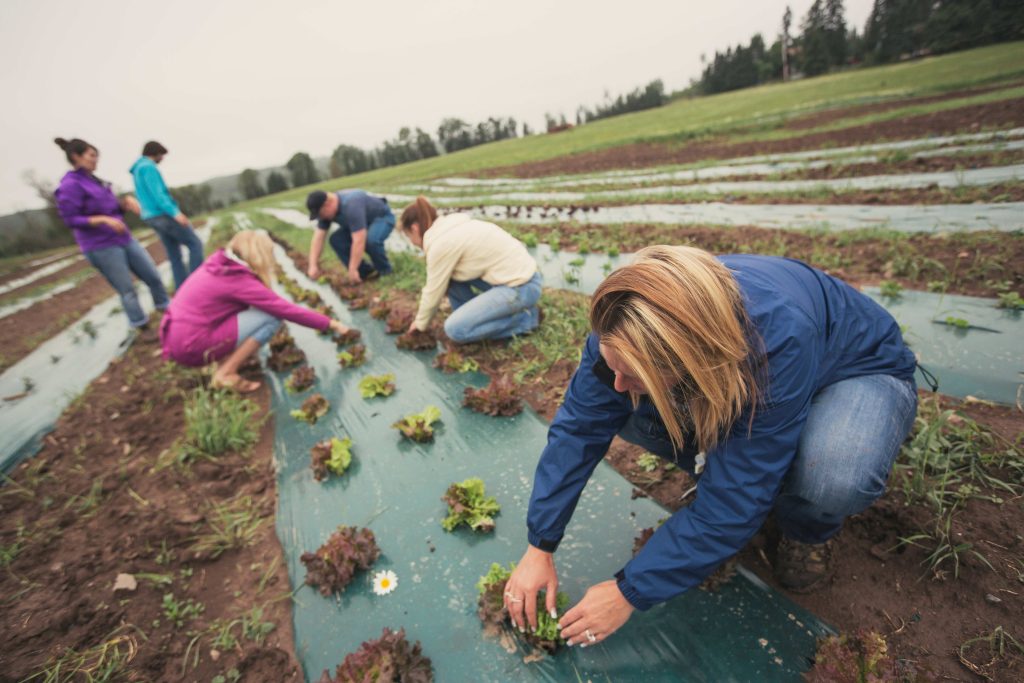
A food system includes everything involved in getting food from the land and water to our plates and bowls: growing, harvesting, processing, transporting, selling, eating, and even composting or sharing leftovers. But it’s not just a supply chain. It’s a complex web shaped by our relationships with culture, environment, economy, and power.
A resilient food system is circular: it regenerates ecosystems, reuses resources, and cares for people and places. Waste becomes nourishment for the next cycle, and care for land, water, and community is baked in from the start, not added later.
Food systems are shaped by decisions about who grows food, who eats, who benefits, and who gets left out. They reflect broader systems of inequality but also hold tremendous potential for justice, sustainability, and repair.
Across our region, community initiatives like farmers markets, seed swaps, land-based education, and community harvests are planting the seeds for a food future rooted in care, reciprocity, and collective action.
Food Sovereignty
Food sovereignty is the right of people to define and control their own food systems. It moves beyond food security (simply having enough to eat) to ask: who decides what’s grown, how it’s shared, and whose knowledge leads the way?
As defined by La Via Campesina:
“Food Sovereignty is the right of peoples to healthy and culturally appropriate food produced through ecologically sound and sustainable methods, and their right to define their own food and agriculture systems.” – Declaration of Nyéléni, 2007
Food sovereignty is grounded in community control, ecological stewardship, and social justice. It uplifts the leadership of farmers, fishers, Indigenous peoples, women, and others long excluded from food system decisions.
Locally, this shows up in frameworks like the Thunder Bay Food Charter, and nationally through frameworks like the People’s Food Policy for Canada. Globally, spaces like the Nyeleni Forum provide opportunities for communities across the globe to come together to plant more resilient seeds for the future of our interconnected food systems.
Food sovereignty invites us to ask not just what’s on our plate, but how it got there, who made it possible, and how can our choices support justice for people and the planet?
Indigenous Food Sovereignty
Indigenous food sovereignty affirms the inherent right of Indigenous Peoples to access, steward, and govern their traditional foods, lands, and waters. This includes hunting, fishing, gathering, seed saving, practicing ceremony, and passing down knowledge. It also means resisting colonial systems that continue to disrupt these relationships.
In Northwestern Ontario, any movement for food sovereignty must begin with Indigenous leadership, protocols, and knowledge systems. Indigenous food sovereignty is a lived practice grounded in respect, responsibility, and resurgence. Supporting it means listening deeply, working in solidarity, and honouring food as a sacred relationship, not just a product.
One way to understand traditional food systems in a local Anishinaabe context is through the 13 Moons Harvest Calendar. It reminds us that sustainable food systems are deeply local and relational.
Food Insecurity
Food insecurity is not about personal choices. It’s about poverty, inequality, and systems that fail to ensure everyone has the resources they need to eat well. It describes when people cannot access enough food, or adequate food, in socially and culturally acceptable ways. The Government of Canada (2022) defines it as:
“The inability to acquire or consume an adequate diet quality or sufficient quantity of food in socially acceptable ways, or the uncertainty that one will be able to do so.”
Food insecurity emerges from structural conditions: low incomes, high costs of living, inequitable social policies, and disrupted access to land, markets, and traditional foodways. In Northwestern Ontario, this includes barriers like insufficient Ontario Works, Ontario Disability Support Program and minimum wage rates that don’t meet the cost of living, high food and fuel prices, housing insecurity, limited transportation, corporate concentration of the food system, and ongoing colonial harms that restrict access to traditional hunting, fishing, and gathering, to name only a few.
Food insecurity reflects broader systems of inequality, but it is also a call to action. Solutions live in income justice, community leadership, strong social policies, and food systems that honour dignity, culture, and self-determination.
Food Literacy
Food literacy is more than knowing how to cook. It includes the knowledge, skills, relationships, and cultural understandings that help people navigate and participate in their food systems.
Food literacy means understanding where food comes from and how it’s grown, harvested, processed, prepared, and shared. It includes the ability to cook, preserve, or safely handle food; to make informed decisions that support personal and community well-being; and to recognize how food intersects with culture, environment, economy, and power.
Food literacy is shaped by community, not just individuals. Access to land, tools, time, mentorship, and affordable food all influence whether people can build their food literacy. When communities have the resources and space to grow, learn, and share food together, they strengthen both individual confidence and the resilience of the entire food system.
Food Policy Groups
Food policy groups (also called food councils or coalitions) bring people together across sectors to co-create food solutions rooted in community needs.
They emerged in the 1980s as a way to address siloed issues like hunger, nutrition, food safety, agriculture and sustainability through more connected and participatory approaches. Think of them as a community potluck: everyone brings something to the table, from lived experience to policy expertise.
Food policy groups create space for participatory governance – where decisions about food are shaped by communities, not just for them. They link health, environment, equity, and economy in ways that support local resilience.
Our original Food Action Network began in 1995, when residents of Thunder Bay came together around a shared vision for change. Today, we continue that work by connecting efforts, strengthening relationships, and making space for community-driven leadership across the food system.
Bioregionalism and Food Systems
Food doesn’t come from nowhere – it comes from somewhere. Bioregionalism invites us to think with the land and waters that sustain us. It asks: what would it look like to design our food systems in relationship with place?
A bioregional food system is one where food is grown, processed, and shared within the natural limits and gifts of a specific area. It supports seasonal eating, short supply chains, and relationships between people and the places they live.
In Northwestern Ontario, this means asking what grows here, what traditions shape our foodways, and how our choices impact everything around us – from mushrooms and microbes to moose and maple trees.
Some call this a “foodshed” – a region defined by how food flows, like a watershed. When communities build food systems that reflect their bioregion – their soils, species, cultures, and histories – they are more likely to be resilient, regenerative, and rooted.
A Whole of Society Approach
Transforming food systems takes all of us. A whole-of-society approach recognizes that the most lasting solutions come from collective creativity, not top-down fixes.
It means that everyone has something to contribute, and that the best solutions come when we draw on the creativity, knowledge, and strengths already alive in our communities, across all sectors, identities, and geographies. It’s about recognizing and supporting what’s already working, whether it’s a backyard garden, a school breakfast program, or a seasonal harvest tradition, and working together to come up with creative ways to make them stronger. Change is most powerful when it’s rooted in local strength.
This approach values lived experience and prioritizes systems that are accountable, transparent, and inclusive. It’s not about a single solution – it’s about networks of care, co-creation, and collective action.
At FAN-NWO, we practice asset-based community development: we start with what’s strong, not with what’s missing. When we support small, connected actions across the food system, we can help seed lasting change that’s rooted, resilient, and real.