
Projects & Networks
Emergency Food Plan
Coordinating compassionate food access during times of crisis.
The Emergency Food Plan (EFP) is a community-led, collaborative strategy that ensures safe, dignified, and equitable food access during emergencies in the City of Thunder Bay. It was developed by a network of civil society organizations in partnership with the City and complements the municipal Emergency Plan by offering a coordinated food response rooted in care, equity, and shared responsibility.
This is the first plan of its kind in Canada – a testament to what’s possible when we come together across sectors.
Emergency Food Plan
A Living, Evolving Network
The EFP stemmed from the challenges of the COVID-19 pandemic, and it continues to grow and evolve. More than a document, it’s an active network of partners who come together to plan, train, and respond, guided by shared ethics and a whole-of-society approach. Its development has already improved coordination, fostered new partnerships, and increased our capacity to act quickly and effectively when crises arise.
The EFP represents a powerful step forward in resilience planning: a shared foundation we can build on, adapt, and improve through ongoing collaboration.
What EFP does
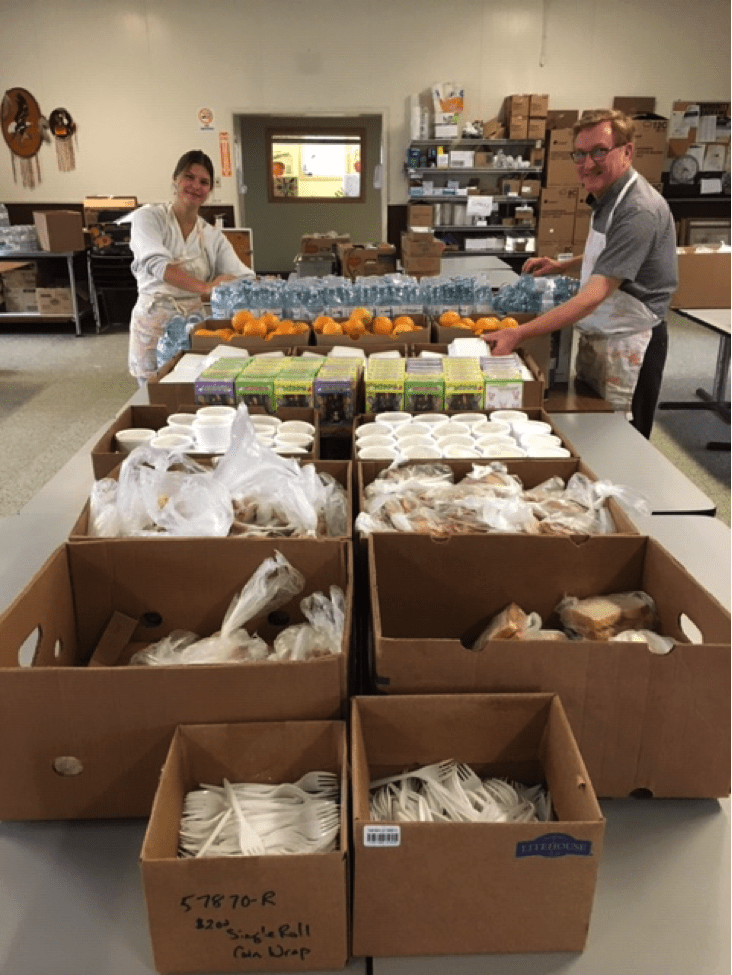
- Ensures community-wide food access during medium- and high-level emergencies
- Keeps essential services running: food banks, meal programs, and distribution networks
- Centers dignity, care, and equity in all emergency food responses
- Coordinates a shared network of trained partners with clearly defined roles
- Supports recovery and adaptation based on changing needs post-crisis
- Maintains and grows through ongoing relationship-building and consensus-based stewardship
How the Emergency Food Plan works
Outside of emergencies, the EFP is governed by a consensus-based network that stewards the plan through ongoing relationship-building, capacity development, and adaptation. This dual model – hierarchical during activation, collaborative during stewardship – balances the need for trust with the need for speed. It ensures that decisions made in the heat of crisis are grounded in relationships built over time.
The EFP is built around a collaborative Concept of Operations that enables swift, coordinated action during emergencies and steady, trust-based stewardship between crises.
During activations, the plan operates using a modified Incident Management System (IMS), with a centralized Emergency Food Branch, clear roles and responsibilities, and direct coordination with the City’s Emergency Operations Centre (EOC), or any other partnering municipality or First Nation. This ensures a nimble, effective, and transparent response structure.
Timeline of EFP Creation
- 2020-2021: Background on the Community Emergency Food Response Plan Report (CEFRP)
- 2022-2023: Initial development and engagement process with 11 original Primary Partners
- November 2023: Ratification of EFP Version 1 and first tabletop exercise
- December 2024: Ratification of EFP Version 2 and second tabletop exercise
Ethics & Values
These values are not just guiding principles – they shape how we act, how we lead, and how we respond. At the heart of the EFP is a shared commitment to:
Equity
Meeting people where they are, recognizing diverse needs and histories.
Dignity
Ensuring food access with respect, safety, and cultural relevance.
Solidarity
Standing with communities, not just serving them.
Care
Centering well-being and interdependence in all actions.
Collaboration
working across difference toward shared goals.
Primary Partners
The EFP is stewarded through the Food Access Coalition, chaired by the Food Action Network, and coordinated by the Emergency Food Plan Coordinator, a role currently held by Food Action Network. Thirteen primary partner organizations help guide the development and implementation of the plan:








Supporting Partners



Support the Emergency Food Fund
The Emergency Food Fund helps our community respond quickly and equitably to urgent food needs during times of crisis.
Held in trust by the Thunder Bay Community Foundation, these funds are accessed only during declared emergencies. The fund supports food procurement, logistics, and critical infrastructure – strengthening the whole system, not just one organization.
How do I contribute to the EFF?
Contributions can be made via the Thunder Bay Community Foundation website – simply select “Emergency Food Fund Non-Endowed Fund” from the drop-down; tax receipt eligible.
Bring the EFP to Your Community
Interested in creating an Emergency Food Plan in your area? We offer presentations, consultations, and toolkits to support local adaptation. Contact us to learn more.