By: Sarah Siska, Executive Director, FAN-NWO
This September, I traveled from Northwestern Ontario to Kandy, Sri Lanka, to take part in the 3rd Global Nyéléni Forum on Food Sovereignty. For nearly two weeks, I joined more than 700 people from over 100 countries in a whirlwind of dialogue, debate, song, struggle, and solidarity.
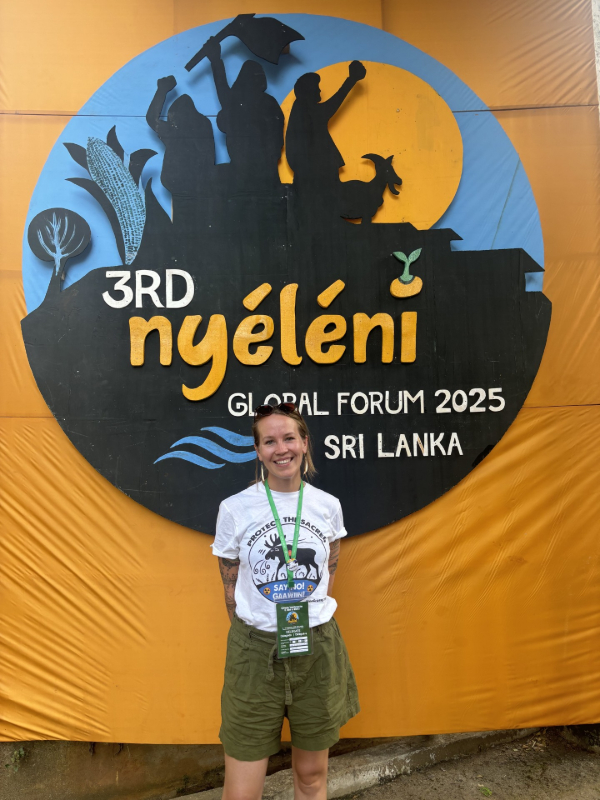
The scale of the gathering was immense, and so were the emotions, the challenges, and the responsibility that came with being there.
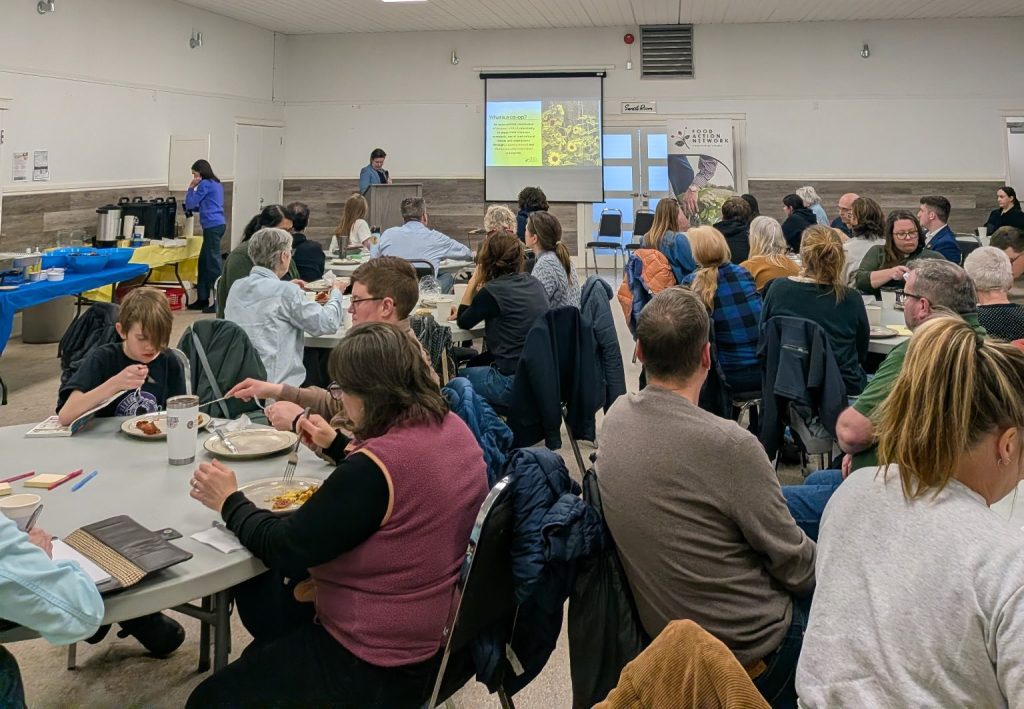
As someone working in community food systems here in Northwestern Ontario, I attended Nyéléni not just as an individual, but carrying questions that matter at home: What does food sovereignty look like in our context? What responsibilities come with participating in global movement spaces? And how do those conversations translate into local action?
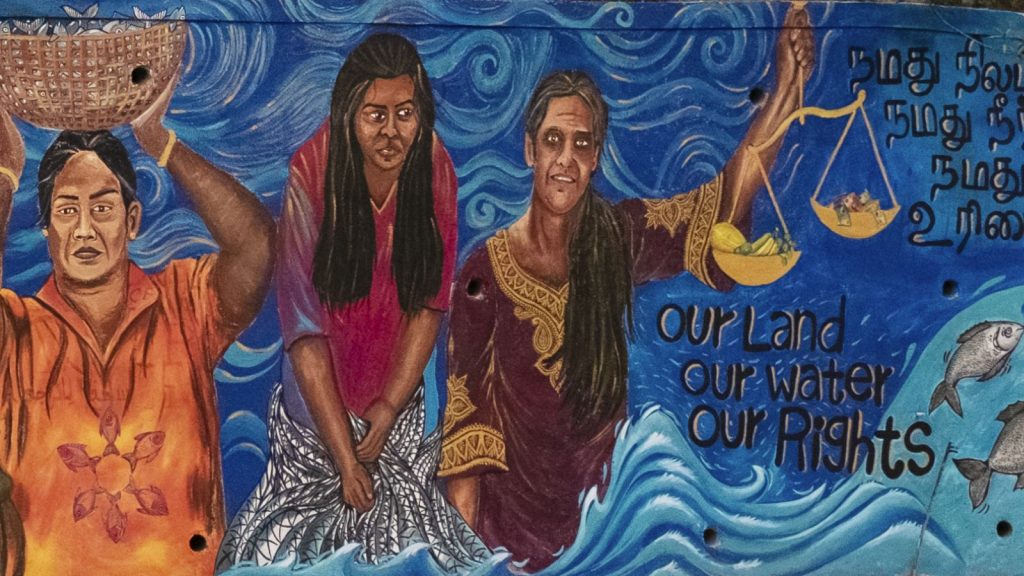
For me personally, it was also a full-circle moment: almost a decade ago, a much younger me painted a community mural of the original Nyéléni Declaration with friends at UBC Sprouts in Vancouver. At the time, I never imagined I’d one day be part of writing its next chapter. That experience, and the political framework it introduced me to, has shaped how I approach food systems work here at the Food Action Network of Northwestern Ontario.
I’ve been home for a while now, and I’m still processing (physically, politically, and emotionally) what it meant to be there. While I’m still working through it all, I wanted to share some initial reflections. The conversations we had in Sri Lanka are too important to leave on the other side of the world. They need to find roots here at home, too.
Why We Gathered
In Kandy, we gathered to talk about something that affects us all: the future of our food systems.
Nyéléni is not a conference in the conventional sense. It is a gathering of movements made up of peasants, fishers, Indigenous Peoples, pastoralists, food workers, migrants, feminists, and community organizers (and many more), all coming together to articulate shared struggles and shared visions for food sovereignty.
It is noisy, multilingual, imperfect, deeply relational, and intentionally so. What struck me immediately was the scale of both difference and connection. I met people from around the world whose daily realities look nothing like mine, yet whose struggles and dreams felt deeply familiar.
Nyéléni is grounded in a simple but demanding idea: that people and communities, not corporations or global markets, should have the power to shape their own food systems. That principle was first articulated collectively in the Declaration of Nyéléni (2007), which defined food sovereignty as:
“The right of peoples to healthy and culturally appropriate food produced through ecologically sound and sustainable methods, and their right to define their own food and agriculture systems.”
This definition is not symbolic. It challenges where power sits in global food systems and insists that decisions about land, water, labour, and food belong with the people most affected by them.
Learning How to Show Up
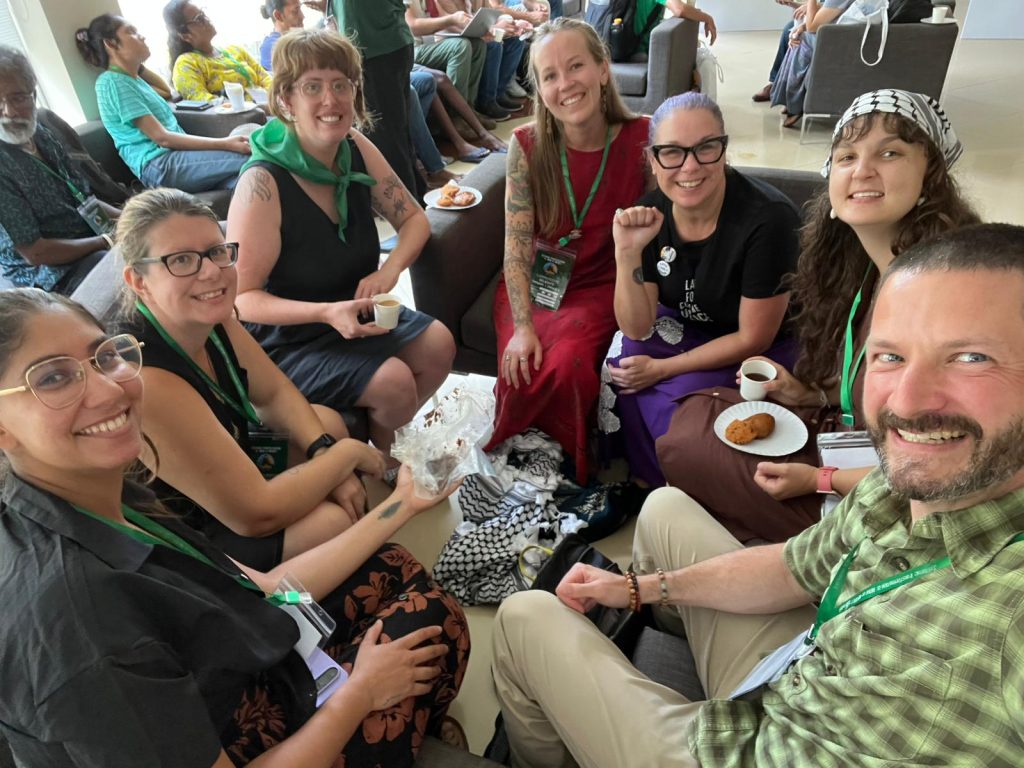
I was part of the North American delegation, made up of around 40 food organizers across so-called Canada and the United States. One of our immediate challenges was that most of us did not know each other before arriving. While some folks had pre-existing relationships, as a group we were meeting for the first time. Personally, I’d only ever met one person in the delegation before getting there – Dr. Bryan Dale, the external reviewer on my Master’s thesis.
Despite shared commitments, we all arrived carrying very different histories, roles, and responsibilities. While North Americans share certain contexts, there’s also a great deal we did not know about one another. Again and again, we returned to the same conclusion: this work requires trust and relationships, and those take time to build.
We are also deeply implicated in the systems of harm we’re trying to change. That means we all have learning and unlearning to do, both on individual levels and as a collective. Even with the best intentions, there’s a real risk of reproducing lateral violence, particularly across differences in power, race, nationality, and lived experience.
International solidarity work is a constant balancing act: stepping up and stepping back, advocating and accompanying, holding accountability without centering ourselves. It requires humility, patience, and (at times) letting your ego get out of the way so that genuine struggle across contexts is possible. This work is not about us as individuals. Movements are collective processes.
I met so many people I am grateful to have learned from and with. As a delegation, we also have real work ahead of us to continue building trust and goodwill beyond this moment. Those of us organizing across so-called Canada and the United States have a lot to learn from one another and from movement partners around the world.
This work is messy, hard, and important. It’s also too important to rush.
Holding Many Truths at Once
This year’s forum took place at the Institute for Cooperative Development in Kandy. Much of our time was spent refining two interconnected political documents:
- a Common Political Action Agenda (CPAA): a dense, 20-page roadmap shaped through years of regional consultations, and
- the Kandy Declaration, a shorter, more accessible political statement summarizing the CPAA that can be used as a movement-building tool.
The challenge was enormous. How do you capture so many lived realities in a single global framework?
The risk was not just disagreement, but oversimplification. While communities everywhere are facing corporate consolidation, climate breakdown, rising authoritarianism, and the erosion of workers’ rights, those struggles look very different depending on place. The conversations repeatedly circled back to nuance, intersectionality, and the need to hold many truths at once, without flattening difference or pretending that shared language means shared conditions.
For me, this reinforced a lesson that applies just as much back home: inclusive food systems don’t happen automatically. They require intentional design, resources, care, and a willingness to stay in difficult conversations.
Bringing Northwestern Ontario into the Room
I arrived at Nyéléni carrying our regional context with me: vast geography, freshwater systems, rural and remote food access challenges, Indigenous food sovereignty and self-determination struggles, and communities navigating extractive economies alongside food insecurity.
Within the North American delegation, we often reflected on what it means to live in what many call the “belly of the beast.” Our governments and corporations are among the largest drivers of global harm, from industrial agriculture to climate disruption, even as our own communities face skyrocketing food costs, disappearing farmland, degraded watersheds, and ongoing colonial land theft. Holding those truths together was uncomfortable, but necessary.
One of the moments I am proudest of was being part of the collective push to ensure that freshwater communities and fisheries were explicitly named in the final agenda and declaration. Oceans matter deeply. But so do the lakes, rivers, wetlands, and watersheds that sustain life across the world, including here along the shores of Lake Superior and across the Canadian Shield.
For many regions globally, and for ours in particular, freshwater is not a footnote. It is culture, livelihood, survival, and sovereignty. Seeing that struggle taken seriously at a global level reinforced why representation in these spaces matters. It affirmed that food sovereignty is not only coastal or agrarian; it’s also rooted in inland waters, fisheries, and watershed-based livelihoods that have too often been rendered invisible. This was a moment where I truly felt able to represent our region.
With that recognition comes responsibility: to continue showing up for freshwater food systems here at home, and to remain accountable to the communities whose realities we carry into global spaces.
What I’m Carrying Home
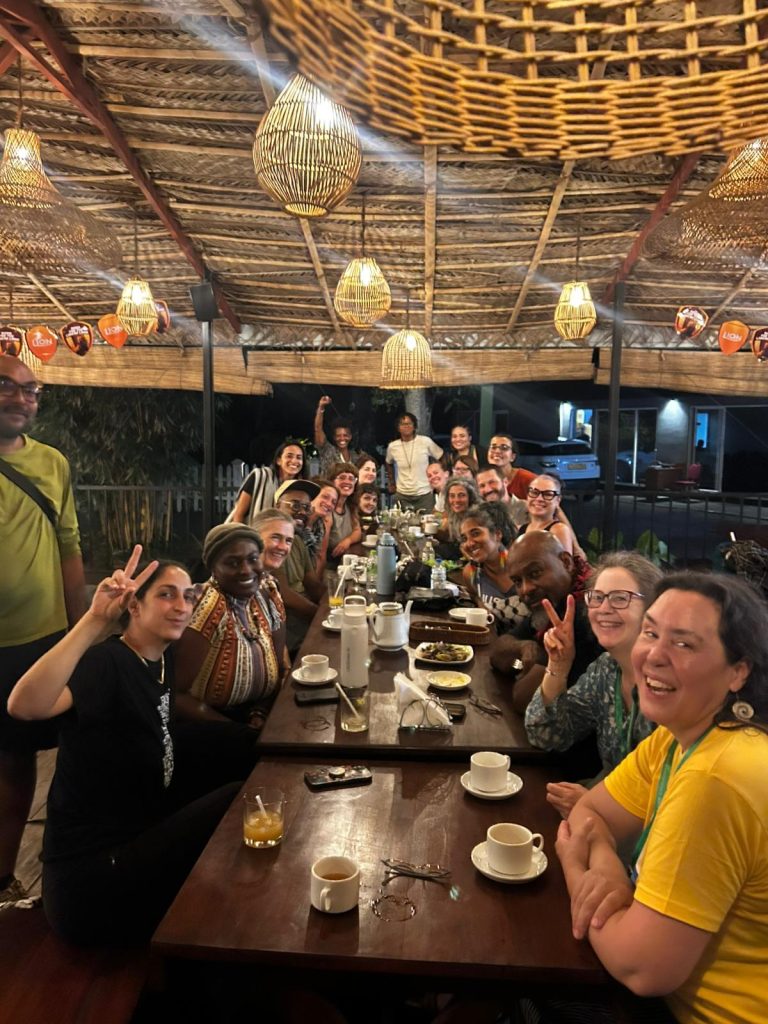
Coming home, I’ve been reflecting on my Master’s research on foodsheds, which are food systems organized around ecological realities like watersheds. One of the enduring lessons from that work was the understanding that just as water flows through a watershed into many places, so too must our struggles, responsibilities, and dreams for change.
There is no truly isolated “local.” Everything we do is part of a larger web of relationships.
Nyéléni didn’t offer easy answers. What it offered was something just as important: a renewed sense that our work in Northwestern Ontario is connected to something much larger, and that we are not alone in pushing for change.
The challenge now is not to recreate Nyéléni at home, but to translate what it teaches into our own context: strengthening relationships, deepening political clarity, and rooting global commitments in local action. The seeds planted in Sri Lanka won’t grow on their own. They need care, patience, and collective tending here too.
I keep returning to a line from the first Declaration of Nyéléni:
“We will share our vision and action agenda for food sovereignty with others who are not able to be with us here in Nyéléni so that the spirit of Nyéléni permeates across the world and becomes a powerful force to make food sovereignty a reality for peoples all over the world.”
To me, this sums up what comes next. I’m carrying the responsibility of stewarding of this process home, along with the knowledge that I still have a great deal of learning to do.
This is the first in a short series reflecting on what the Nyéléni process offered, and what it asks of us now. In the coming posts, I’ll explore the Kandy Declaration in more depth, and what global food sovereignty spaces can teach us about solidarity, accountability, and movement-building closer to home.