By: Sarah Siska, Executive Director, FAN-NWO
This is the second blog in a series on the Nyéléni Process and food sovereignty. Read the first piece in the series reflecting on Sarah’s experience as a delegate at Nyéléni here.
Take a moment to think about the role of food in your life, beyond simply eating. Have you ever cooked for someone, shared food, learned a recipe from a loved one, grown something, or helped feed others in any way?
If so, you’ve already experienced the relationship between food, community, and kinship. These everyday acts are where food sovereignty begins. But what does it actually mean?
On its own, food sovereignty can sound like a value statement or policy goal. In reality, it’s a political organizing framework shaped through decades of organizing, negotiation, conflict, and collective decision-making by communities around the world.
This blog is an invitation to slow down and look more closely at where food sovereignty comes from, how it has been shaped, and why it matters – not just globally, but here in Northwestern Ontario, in the places and practices many of us are already part of.
Food Sovereignty is a Movement, not a Slogan (or a Declaration!)
After returning from the 3rd Nyéléni Global Forum on Food Sovereignty, I’ve been thinking a lot about how often food sovereignty is referenced without its political context. Too often, the language is separated from the movements that shaped it, making it easier to adopt the words without engaging in the work behind them.
Food sovereignty is not a branding exercise or a neutral framework. It comes from struggle and continues to be shaped through ongoing struggles. Understanding the history of the movement helps understand where we are today, and where we might go next.
Food sovereignty emerged from the lived realities of communities who were excluded from global food and agriculture decision-making. The term was introduced internationally by La Vía Campesina at the World Food Summit in 1996, as a direct challenge to corporate-controlled, market-driven food systems. However, the practices it describes are much older.
Indigenous Peoples, peasants, fishers, pastoralists, and food workers have organized to protect land, water, seeds, and food as collective responsibilities for generations. This work has often been done without recognition, and often in direct opposition to colonial, extractive, and industrial systems. Food sovereignty gives these struggles a shared political language, and a way to name power, not just food.
The declarations referenced in this blog – the Declaration of Nyéléni (2007), the Declaration of the International Forum for Agroecology (2015), and the Kandy Declaration (2025) – are not blueprints or finished answers, because movements are not built by declarations. They are built by people.
These texts are best understood as political tools: collectively negotiated documents that are part of a living movement history that reflect shared commitments, tensions, compromises, and evolving analysis. They are resources we inherit, interpret, challenge, and plant in our own soils, not rules meant to be followed unchanged nor engaged with as static policy statements.
Defining Food Sovereignty: The Declaration of Nyéléni (2007)
In 2007, over 500 representatives from over 80 countries gathered in Sélingué, Mali, to strengthen a global movement for food sovereignty. They built a village brick by brick, shared meals, and collectively adopted the Declaration of Nyéléni.
The declaration offered a grounding definition:
“Food sovereignty is the right of peoples to healthy and culturally appropriate food produced through ecologically sound and sustainable methods, and their right to define their own food and agriculture systems. It puts those who produce, distribute, and consume food at the heart of food systems and policies rather than the demands of markets and corporations.”
Crucially, this definition makes it clear that food sovereignty is not only about production: it’s about power, dignity, and social transformation.
The declaration explicitly linked food sovereignty to ecological sustainability, cultural and territorial rights, democratic control over food systems, stating:
“Food sovereignty implies new social relations free of oppression and inequality between men and women, peoples, racial groups, social classes and generations.”
It also affirmed the central role of women and youth, recognized care work and intergenerational responsibility as political, and framed food sovereignty as a shared global struggle:
“Every struggle, in any part of the world for food sovereignty, is our struggle.”
From the beginning, food sovereignty was never meant to apply only to rural or agrarian contexts. It speaks to urban, rural, coastal, and inland communities alike, across both the Global Majority and Global Minority.
Agroecology as a Political Practice: The Declaration of the International Forum for Agroecology (2015)
In 2015, movements gathered again at the Nyéléni village. Participants represented constituencies that produce around 70% of the food consumed globally.
This gathering responded directly to the growing co-optation of agroecology as a set of technical tools, divorced from its political roots. The resulting declaration reclaimed agroecology as a lived practice, a movement, and a form of resistance:
“We see Agroecology as a key form of resistance to an economic system that puts profit before life.”
Agroecology was named not as a universal recipe, but as a way of living and organizing rooted in place:
“Agroecology is a way of life and the language of Nature that we learn as her children. It is not a mere set of technologies or production practices. It cannot be implemented the same way in all territories.”
The declaration was also explicit about what is often softened or erased:
“Agroecology is political; it requires us to challenge and transform structures of power in society.”
In this context, agroecology is not about optimizing yields. It is about transforming relationships between people, land, and power. Or, as it’s described in the Declaration:
“Agroecology means that we stand together in the circle of life”
Responding to Today’s Crises: The Kandy Declaration (2025)
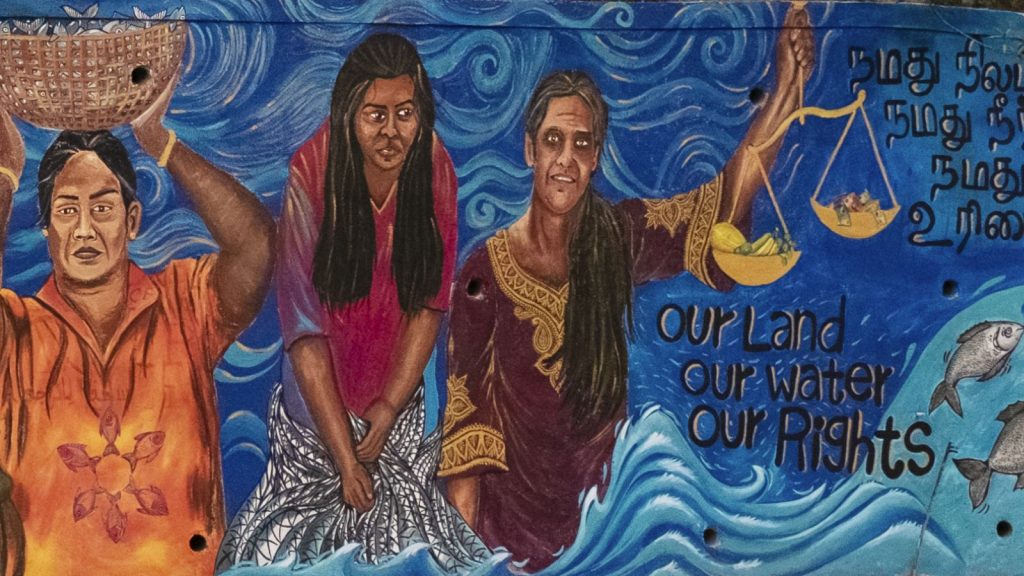
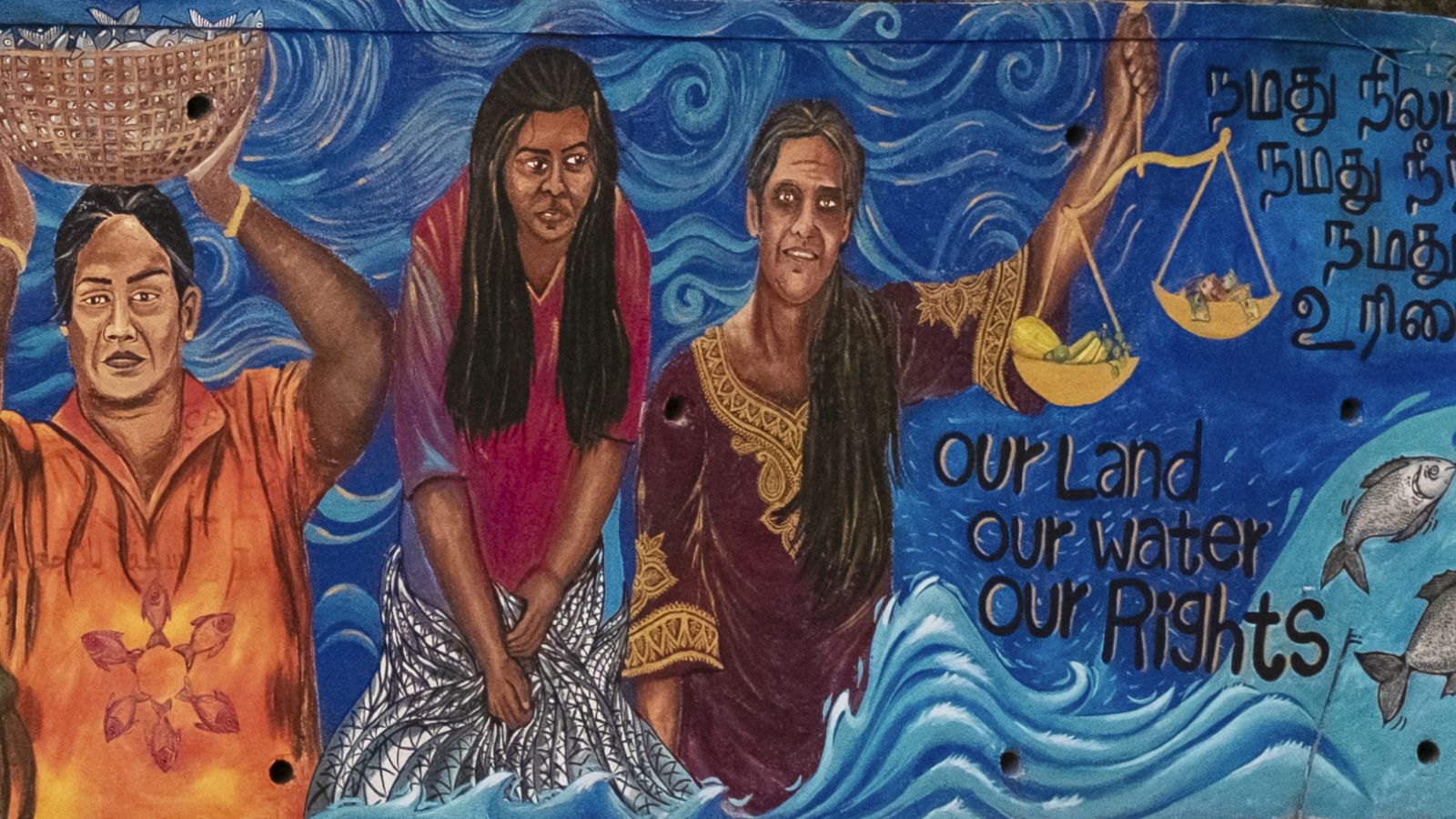
The 3rd Global Nyéléni Forum took place in September 2025 in Kandy, Sri Lanka, in a moment shaped by overlapping crises: climate breakdown, violent conflict, corporate concentration, mass displacement, and rising authoritarianism.
The forum culminated in the Kandy Declaration, which closed with a clear call:
“Systemic Transformation — Now and Forever!”
The declaration connects food sovereignty to broader struggles for land, water, labour, climate justice, Indigenous rights, and care economies, highlighting that these issues cannot be separated. It also situates itself within a longer movement history:
“We are inspired by our legacies of resistance … These struggles teach us the urgent need for convergence among us to effect a deep systemic transformation that dismantles the different structures of oppression.”
Importantly, the declaration broadens food sovereignty beyond land-based food systems, recognizing rivers, lakes, wetlands and oceans as central to life and livelihoods:
“From the rivers and lakes, across our lands to the wetlands and sea … we will fight for universal access to healthy and culturally appropriate food.”
Where earlier declarations laid foundations, the Kandy Declaration makes it clear that we cannot have food sovereignty without broader systemic transformation:,
That brought this document beyond food systems specifically, and to broader calls for democracy, peoples’ rights, peace, and international solidarity.
A future blog will explore the Kandy Declaration in more detail.
Why the Nyéléni Process Matters in Northwestern Ontario
Food sovereignty is not owned by any one organization, country, or sector. But it is also not something imported from elsewhere.
It is already practiced here through Indigenous food systems, freshwater harvesting, seed saving, hunting, fishing, farming, and community-led food initiatives grounded in mutual aid and collective care. It can look like sharing food with family and neighbours, tending a community garden, organizing a local food box program, or protecting access to land and water. Food sovereignty as a movement is expressed in these intimate, everyday actions.
What the Nyéléni Process offers is shared political language: a way to connect local practices to global struggles without flattening difference or erasing place.
It reminds us that there is no purely “local” food system. Our food, water, labour, and policies are shaped by global forces, and our actions here matter beyond our region.
Food sovereignty asks us to stay rooted, while staying connected. It also asks us to recognize that many of us are already part of this work, and that there is a place for all of us to deepen it, together.
If you’ve ever grown food, shared a meal, learned from someone, or cared for others through food, you’re already part of this. The question now is how we grow these everyday actions into something collective, something powerful.
In future blogs, we’ll continue exploring how these global movements connect to what’s happening here and how you can be part of it.
A Few Key Terms:
Food Sovereignty: The right of peoples to define their own food systems, prioritizing people, ecosystems, local economies, and collective well-being over profit. Food sovereignty also centers decision-making power in communities. Learn more at www.foodsovereignty.org.
Nyéléni Process: A global, people-led movement advancing food sovereignty through shared principles, declarations, and collective organizing. Named after Nyéléni, a legendary Malian peasant woman, the process is grounded in ongoing relationships and struggle. Learn more at www.nyeleni.org.
Agroecology: A way of farming, living, and organizing rooted in ecological principles, Indigenous knowledge, and collective power. Agroecology is not just techniques for growing food, it is a political practice that serves as a roadmap to achieving food sovereignty.
La Vía Campesina: An international movement of peasants, Indigenous Peoples, fishers, pastoralists, migrant farmworkers, and small-scale farmers defending peasant agriculture and food sovereignty. Formed in 1993 and represents about 200 million small-scale food producers. The National Farmers Union of Canada was a key founding member. Learn more at www.viacampesina.org.